Back Pain and Diagnosis
Back Pain and Diagnosis

If the back pain is, serious it will often show up in MRI or CT scans. X-rays will show back conditions, however since doctors review all areas, except the alignment of the bones and spine, thus most times the x-rays only reveal what the doctor wants to see. This happens to many people, including myself. A pro in analyzing the spine and bones is the man you want to see if you have chronic back conditions.
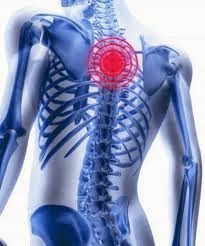
The types of back pain include sciatica. The back problem may be listed as slip disk in some instances, yet the pain often challenges doctors diagnose since a sharp, electrical shock-like and distressing ache starts at the back and then travels to the legs. Sometimes the pain is intermittent, while other times the pain may be chronic. The particular problem often requires surgery to correct. Sciatica according to few experts is one of the worst backaches endured, since even when the pain has mild pain it is difficult to bend forward and over to tie a shoe. The problem rests in the spine, joints, and connective elements of the spinal column that links to the entire body.
The spinal column makes up muscles, bones, central nerves, etc. What holds the spine together is disks, connective tissues, tendons, ligaments, etc? When a person stands erect, the spine’s elements will join to apply tension. You can visualize the tension by considering how a string will respond when you pull it down. The changes assist the body in mobility; as well, it determines how the body responds to movement.
The lower back is made up of large-scale structures, including the backbone and the hip joints. The hip joints connect to the pelvis and each element joins with the spinal column at the triangle bone in the lower back and at the baseline of the spine that joins the hipbones on either side and forms part of the pelvis. (Sacrum)
Combined these elements give us the ability to move and provides flexibility. In addition, the organs are directed by these elements.
The spine is held up by the larger group of bones at the lower region, smaller base, and the top architectures. Stress occurs at the area, since below this region larger muscles work by directing and sparking movement. This is how the legs are able to move, which brute stress is applied to the vertebrae. At the back, we also have a lumbar spinal disk. The disk is affected by the brute stress, since each time we bend and sit, we are applying more than 500 pounds to this area, yet it stretches to a “square inch” around the disks and per count along the area.
TENS Machine for Pain Relief – GHTENS Rechargeable EMS Unit with 5 Modes, 80 Programs, Dual Channels & 8 Electrode


Comments
Post a Comment